The first hybrid events simply pointed a camera at a conference designed for a room — and remote audiences noticed. The stream felt like surveillance, not participation. Good hybrid design treats the remote audience as a second room with its own experience, while keeping one unified programme.
Design for the second room
Remote viewers need their own welcome, their own pacing and their own moments: a host who acknowledges them by name, questions surfaced from the chat, and session breaks that include rather than exclude them. The programme is one; the hospitality is doubled.
Get the technical layer right early
Hybrid production doubles the failure points. Presenters need confidence monitoring and audio that works both in-room and on-stream; remote presenters need rehearsal slots with the actual setup, not a promise that “it will work on the day”. Build the run order around a technical rehearsal, not around optimism.
Graphics carry double duty
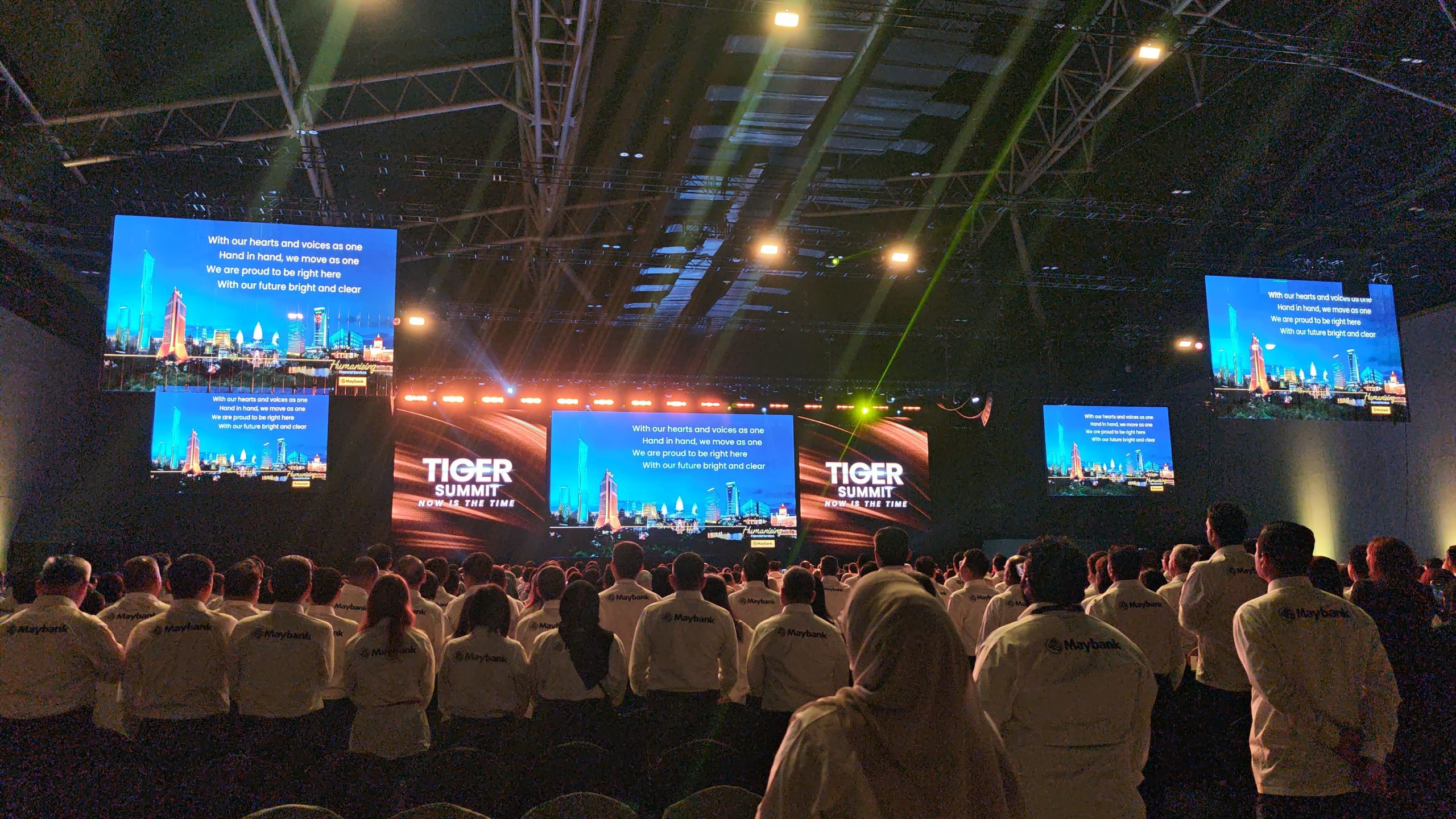
Lower-thirds, agenda cards and speaker introductions serve the room’s screens and the stream simultaneously — but only if designed once, for both. We build hybrid graphics packages that read on a 4-metre LED wall and on a phone in bed, which is where a meaningful share of your audience actually is.
Capture, don’t just broadcast
The stream ends; the content shouldn’t. Session recordings, same-day highlight edits and quote-card graphics turn a one-day event into a quarter of content. Plan the afterlife of the event before it begins, and the investment compounds.